
How we can help
Augmentative and Alternative Communication (AAC) describes ways to support spoken communication or communicate using alternatives to speech. Our service helps people explore those options, put a system into everyday use and support the people communicating with them.
AAC assessment and exploring options
You do not need to choose a device before getting in touch. Assessment starts with getting to know the individual: how they currently communicate, the people they spend time with and the everyday situations that matter to them.
Where appropriate, we can explore different communication tools and systems with you. Recommendations are individual. We explain them and agree next steps with the person and their support network.
Support with an existing communication system
Perhaps a system is already in place, but you have questions about using it. You may want help with an app or device, practical ideas for everyday communication, or guidance for a new member of the support team.
Our AAC support includes implementation, advice, coaching and device or app support. Tell us which system you use and what you would like help with so we can discuss suitable input. Getting in touch does not commit you to replacing a system or buying equipment.
Coaching for communication partners
A communication partner is someone who communicates with the person using AAC. That could be a parent, sibling, friend, teacher, support worker or someone else in their daily life.
We work with the people around an individual as well as the individual themselves. Coaching can help partners understand the system and explore how to bring it into ordinary activities. The aim is practical support that makes sense outside a therapy session.
Support that starts with the person
You might be a parent looking for a starting point, an adult exploring support, a family member helping someone use an existing system, or a professional working alongside an AAC user.
Our speech and language therapy services include support for children, as well as adults with learning disabilities. We also work with families, support networks, schools and other professionals. Our services page explains these different areas of work; a first conversation gives you a chance to discuss whether our input fits your needs.
What happens first?
Contact the team and ask about a free initial consultation. You do not need to choose a service or know which assessment to request. A brief outline can help us understand your question:
- Who is the support for, and what is your relationship to them?
- How do they communicate now, and do they already use an AAC system?
- What would you like help with, and where is that support needed?
- Where are you based, and are you asking about in-person or online support?
Please do not send detailed reports, recordings or a clinical history in your first message. We can explain how to share further information if it is needed.
We can discuss what an assessment or other appropriate next step would involve. The fees and getting started page lists current charges, packages and their conditions. Ask how these apply to the work you are seeking; schools and other professional clients can contact us for a proposal.
In person and online
Our team is based in Totnes and works in homes and educational settings across Devon and Cornwall. Tell us your location and the setting in which support is needed so we can discuss the arrangements.
Online support can include AAC assessment and implementation, as well as consultations and coaching for the people around the individual. We discuss whether the particular work is suitable for an online session and who should take part. Read about online support for more information about the different types of appointment and preparation.
Working with families, schools and teams
The same person may communicate with several people across different settings. Sharing an understanding of their communication can be an important part of putting recommendations into practice.
We offer input for families and support networks, and work with schools and professionals. The arrangement depends on the work being requested. For a school, setting or case-management enquiry, tell us a little about the support you are seeking so we can discuss the scope and pricing.
Read about schools and professional support or meet the team to find out more about our roles and experience.
What is AAC?
AAC is about communication, rather than a particular device. A person might use their body, a paper-based system, an electronic aid, or a combination of approaches. What is useful depends on the individual and the situations in which they communicate.
Different ways to communicate
Unaided communication uses the body, without an additional tool. Examples include gestures, facial expressions and signing.
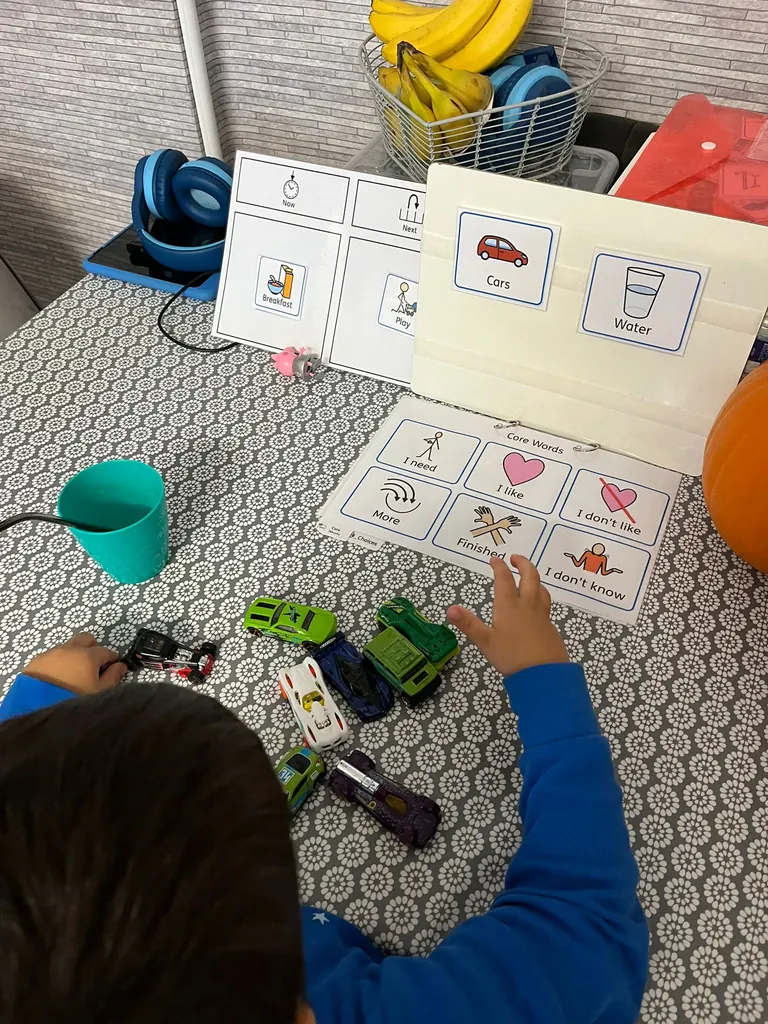
Paper-based communication uses a physical aid such as a communication book, photographs or a board of symbols and words. People can use these in different places and activities.
Electronic communication aids can include an app on a tablet or a dedicated device. Some produce spoken messages when a person makes a selection.
These are examples, not a list of systems that everyone needs. We consider the person’s existing communication alongside possible additional support. Our introduction to AAC is another place to begin if the terminology is new to you.
AAC in everyday life
Communication includes much more than asking for something. It can be a way to share an opinion, ask a question, tell a joke, say no, comment on something interesting or spend time with another person. These everyday reasons to communicate are central to our approach.
Our team’s social resources share examples of AAC in everyday settings, including modelling with a paper communication display while out and about. Modelling means a communication partner uses the person’s AAC system as part of their own communication. It is a topic we can explore with you in the context of the person’s individual support.
Our resources bring together introductions to these ideas, with links to the practice’s original examples.
Your AAC questions
Do we need to have a device already?
No. You can contact us before choosing a system, or when you already use one. We can discuss the question you have and explain an appropriate next step.
Can you help us with a system we already use?
Our AAC support includes implementation, coaching and device or app support. Tell us about the system and the support you need so we can discuss whether our input is suitable.
Can family members and school staff be involved?
We work with families, support networks, schools and professionals. Who takes part depends on the individual and the work you agree with the team.
Where do you work?
Our team is based in Totnes and works across Devon and Cornwall. Tell us your location and the setting in which support is needed. We also offer online consultations and coaching where these are suitable.
Where can I find your fees?
Our Fees and getting started page lists current assessment and session charges, packages and their conditions. Schools and professional clients can contact the team for a proposal. See current fees.